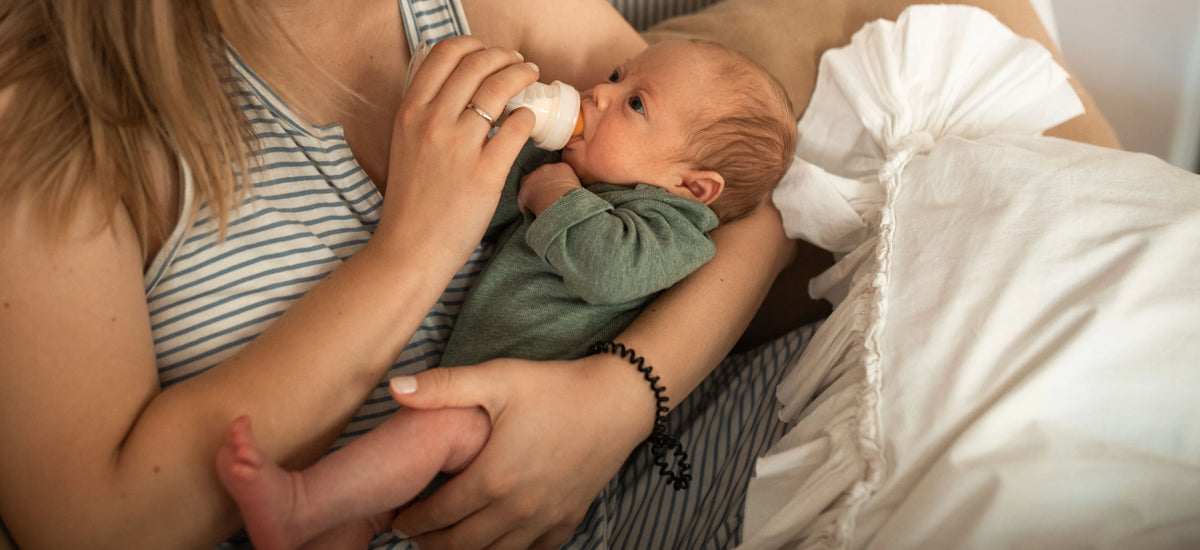

Pidió un bebé bajo un árbol de 300 años.
Tres años después, se hizo realidad.
Mahfam Braithwaite es esposa, madre de dos hijos y creadora de contenido que pasó tres años y medio intentando ser madre antes de dar la bienvenida al mundo a su hija Kinsey, y más tarde a su hijo Charlie. Comparte las realidades de la vida de su familia en las redes sociales. Ha construido una comunidad de mujeres que saben lo que significa navegar por la infertilidad, el posparto y la maternidad primeriza sin una guía. Cuando le pedimos que compartiera su historia para nuestra serie de madres primerizas, no se guardó nada. Lo que sigue es el tipo de honestidad que la mayoría de las personas se reservan para sus amigos cercanos; y que toda madre que está pasando por ello merece escuchar.
Mahfam nunca imaginó que quedarse embarazada sería difícil.
Estaba recién casada, profundamente enamorada y llena de planes para una familia grande. Ella y su esposo Colin caminaban por las calles de Williamsburg, Virginia, tomados de la mano y hablando sobre cuántos hijos querían tener. El futuro se sentía lleno de posibilidades.
Luego pasó un año. Luego dos. Luego tres. Lo que siguió fue una etapa que Mahfam describe como una de las experiencias más aislantes de su vida. Un camino de fertilidad marcado por cinco ciclos de inseminación intrauterina (IIU) fallidos, un miedo a las agujas tan severo que hacía que las citas rutinarias fueran abrumadoras, visitas al médico sola durante el COVID, un especialista despectivo que la dejó llorando durante todo el camino a casa y el dolor silencioso de ver a todos a su alrededor quedarse embarazados con facilidad.
Entonces no sabía que su historia terminaría con dos hijos y una perspectiva de la maternidad ganada con esfuerzo que no suficientes mujeres se sienten seguras de decir en voz alta.
Las cifras detrás de la lucha silenciosa de la infertilidad
La experiencia de Mahfam es mucho más común de lo que la mayoría de la gente piensa; sin embargo, la infertilidad sigue siendo uno de los desafíos de salud menos discutidos que enfrentan las mujeres, a menudo llevada en silencio mientras el mundo que las rodea celebra embarazos que parecen ocurrir fácilmente.
-
13.4%: El porcentaje de mujeres de 15 a 49 años en los Estados Unidos que tienen algún tipo de infertilidad.1
-
1 de cada 5: la tasa de infertilidad de las mujeres casadas que aún no han tenido hijos.
-
$15,000 a $30,000: el costo de un solo ciclo de fecundación in vitro (FIV).
-
2.5: el número promedio de ciclos necesarios para lograr el embarazo.2
El costo financiero y emocional se acumula rápidamente. Para muchas mujeres, incluida Mahfam, la parte más difícil ni siquiera son los procedimientos en sí mismos.
"Una de las partes más difíciles", dice Mahfam, "no fueron necesariamente los tratamientos de fertilidad en sí. Fue el miedo. Había medicamentos que ni siquiera podía administrarme yo misma. Necesitaba el apoyo de mi terapeuta de suelo pélvico y de mi esposo. Lloraba antes de las citas, temblaba durante los procedimientos y a menudo tenía que lidiar con miedos que se sentían abrumadores".
También aprendió, por las malas, lo mucho que importa elegir al médico adecuado. Después de que un especialista la hiciera sentir menospreciada y no escuchada, otra doctora de fertilidad, la Dra. Johnston, cambió todo. "Nos trató con amabilidad, respondió a todas nuestras preguntas y nos ayudó a sentirnos como personas en lugar de solo otro caso de fertilidad".
Un deseo bajo el árbol de una antigua iglesia
Después de cinco IIU fallidas, Mahfam y Colin vendieron su casa en Virginia y se mudaron a Florida. Se tomaron un descanso de los tratamientos e intentaron comenzar un nuevo capítulo.
Durante un viaje a Inglaterra para visitar a la familia de Colin, pasearon por los Cotswolds y se encontraron con una antigua iglesia. Un lugareño les dijo que si se paraban debajo de cierto árbol y pedían un deseo, se haría realidad. Se pararon juntos y pidieron tener un bebé sano.
Unas semanas después, tras tres años y medio de infertilidad, Mahfam descubrió que estaba embarazada de su hija, Kinsey.
"De hecho, al principio olvidé revisar la prueba", dice. "La dejé en el baño y seguí con mi día porque estaba muy segura de que sería negativa. Cuando regresé y vi el resultado, quedé completamente en shock".
Primero vino la incredulidad, luego la gratitud y después el miedo. La infertilidad le enseñó a proteger su corazón.
Cuando finalmente llegas, la parte difícil no ha terminado
Kinsey llegó cinco semanas antes de tiempo.
Lo que siguió fue un curso intensivo sobre el tipo de maternidad para el que ningún libro de bebés te prepara: controles de peso, visitas al hospital, las palabras "retraso en el crecimiento" en una cita médica, un terapeuta ocupacional que se convirtió en una de las personas más importantes en la vida de Mahfam.
"Recuerdo estar sentada en el hospital llorando porque ni siquiera podía quitarle la ropa para que los médicos la examinaran", cuenta. "Estaba tan abrumada que Colin tuvo que intervenir y hacerlo por mí".
Ese fue el momento en que su definición de maternidad cambió. No se trataba de hacerlo todo perfectamente. Se trataba de presentarse con miedo y hacerlo de todos modos.
El posparto trajo su propia ola. El dolor se sumó al agotamiento; perdió a su abuelo antes de que naciera Kinsey, y su abuela falleció antes de que tuviera la oportunidad de compartir su segundo embarazo. Luchó emocionalmente de formas para las que no estaba preparada y, con su primer bebé, tenía miedo de admitirlo.
No está sola en ese silencio. Los trastornos de salud mental materna como la depresión posparto afectan a aproximadamente 600,000 (o el 20%) de las madres estadounidenses cada año. Se estima que hasta el 50% de las madres nunca son diagnosticadas por un profesional de la salud, y que el 75% de las mujeres que necesitan tratamiento nunca lo reciben.3
"Con mi primer bebé, tenía miedo de admitir que estaba pasando por un mal momento. Con el segundo, fui mucho más abierta con mis médicos y acepté ayuda cuando la necesitaba. Me di cuenta de que no estaba destinada a cargar con todo sola".

El viaje de la alimentación del que nadie le advirtió
Antes de que llegara Kinsey, Mahfam asumió que la lactancia materna sería natural. Sabía que podría ser un desafío, solo que no sabía cuánto.
Como Kinsey fue prematura, su leche no bajó de inmediato. Amamantó, extrajo leche, registró cada onza, asistió a consultas de lactancia y se preocupó constantemente. Luego vino la alergia a la proteína de la leche de vaca: sangre en las heces de Kinsey, una llamada nocturna al pediatra, un cambio dietético inmediato. "Hubo muchas lágrimas durante esa temporada", dice.
Su experiencia refleja una realidad que enfrentan muchas madres primerizas. Una encuesta de 2024 a casi 7,000 padres que amamantan encontró que la logística de la extracción (empacar, transportar un extractor y limpiar las piezas) fue citada por el 60% de los encuestados como su principal desafío. Más de la mitad dijo que encontrar un lugar para extraerse leche o amamantar fuera de casa era su segundo mayor obstáculo. Y entre el 20% y el 50% de las madres dejaron de amamantar por completo o añadieron fórmula antes de lo que habían planeado.4
El segundo bebé de Mahfam, Charlie, fue diferente. Se prendió al pecho de inmediato, allí mismo en la sala de recuperación después de su cesárea. "Fue uno de los momentos más emotivos para mí porque fue muy diferente a lo que había experimentado antes".
Ese contraste le enseñó algo que ahora comparte siempre que puede: cada bebé es diferente. Cada viaje de alimentación es diferente.
"Ya sea que amamantes, te extraigas leche, alimentes con fórmula, complementes o hagas una combinación de todo, lo que más importa es que tu bebé esté alimentado y amado".
Un año después, lo imposible volvió a suceder
Los médicos le habían dicho a Mahfam que su reserva ovárica era extremadamente baja. Una concepción natural nuevamente sería muy poco probable.
Un año después de que naciera Kinsey, descubrió que estaba embarazada de su hijo, Charlie.
"Después de todo lo que costó ser su mamá, esos pequeños momentos significan todo", dice, describiendo la primera vez que Kinsey la llamó "Mamas". "Hoy, la maternidad significa escuchar a Kinsey llamarme así. Significa que Charlie me busque cuando quiere consuelo. Significa cuentos antes de dormir, cocinas desordenadas, noches sin dormir y bracitos envueltos alrededor de mi cuello".

Lo que quiere que toda madre que está luchando escuche
Mahfam ha pensado mucho en lo que le gustaría que alguien le hubiera dicho, tanto durante la infertilidad como durante la temporada de posparto que siguió.
-
Sobre la infertilidad y la salud mental:
"No te rindas contigo misma. Tu camino puede no parecerse al de otra persona. Tu cronograma puede no parecerse al de otra persona. Y eso está bien".
-
Sobre la parte más difícil del posparto:
"A veces, 'voy a ayudarte' se convierte en alguien que viene y carga al bebé por una hora. La mayoría de los bebés quieren a su mamá. Lo que muchas madres realmente necesitan es alguien que cuide de ellas. Trae una comida, dobla una carga de ropa, pregúntale cómo está".
-
Sobre compararte con los demás:
"Una mujer que necesitó FIV no es más fuerte que una mujer que concibió naturalmente. Una mamá que amamanta no es mejor que una mamá que se extrae leche. Una mujer que da a luz vaginalmente no es más madre que una mujer que da a luz por cesárea. La maternidad no se define por cómo entra tu bebé al mundo. Se define por el amor, el sacrificio, la paciencia y el cuidado que le das a ese niño todos los días".
-
Lo que espera que otras mamás retengan:
"Puedes estar agradecida y aun así estar luchando. Puedes amar a tus hijos con todo tu corazón y aun así tener días difíciles. Puedes estar abrumada, agotada, llorando en el baño, cuestionándote a ti misma, y aun así ser una madre increíble. Pedir ayuda no te hace débil. Te hace humana".
Tres años y medio de infertilidad, un bebé prematuro, desafíos de alimentación y oscuridad posparto. Pérdidas personales que llevó en silencio mientras intentaba estar presente para sus hijos. Al otro lado de todo: dos hijos sanos, una perspectiva ganada de la manera difícil y una historia que podría ser justo lo que otra madre necesita escuchar hoy.
Cómo Zomee encaja en la versión real de la maternidad
Mahfam estaba en medio de los desafíos de alimentación descritos anteriormente: registrar onzas, gestionar una dieta de eliminación de lácteos, extraerse leche las 24 horas del día. Entonces encontró a Zomee. Lo encontró como lo hacen muchas mamás: a través de otras madres reales compartiendo experiencias reales.
Lo que llamó la atención no fueron solo los productos. Fue saber que Zomee fue fundado por una madre. En sus palabras: "Saber que la empresa fue creada por alguien que había experimentado personalmente partes de este viaje hizo que se sintiera más identificable y significativo para mí".
Ese origen define todo. El extractor de leche portátil con calor Mother Nature W1 fue construido para la mamá que persigue a un niño pequeño mientras intenta mantener su suministro; "la vida con dos hijos es ocupada", dice Mahfam, "y poder extraer leche mientras me muevo y cuido a mi familia ha marcado una gran diferencia".
El extractor de leche de modo dual de grado hospitalario Mother Nature H1 fue diseñado para la mamá que necesita un apoyo serio desde el primer día.
El masajeador de lactancia con calor y frío, el bolso cruzado para extracción que guarda los artículos esenciales del bebé junto con las piezas del extractor… cada uno es la respuesta a un problema que una mamá real tenía.
"A veces son las pequeñas cosas las que marcan la mayor diferencia".
Un extractor construido alrededor de tu día, no al revés. Productos diseñados por alguien que entendió que el día de una madre primeriza no se detiene por nada.
Mahfam pasó tres años y medio luchando por convertirse en madre. Asistió a citas sola, con miedo y con esperanza. Resolvió la lactancia dos veces, de dos maneras completamente diferentes. Pidió ayuda cuando la necesitaba y aprendió que hacerlo la hacía más fuerte, no más débil.
Si te encuentras en algún punto de ese viaje ahora mismo, exactamente para eso se creó Zomee. Explora los extractores de leche y el apoyo posparto de Zomee en Zomee.com.
Fuentes:
-
CDC / Centro Nacional de Estadísticas de Salud — "Infertility and Impaired Fecundity in Women and Men in the United States, 2015–2019," Informes Nacionales de Estadísticas de Salud No. 202, abril de 2024: cdc.gov/nchs/data/nhsr/nhsr202.pdf
-
RESOLVE: La Asociación Nacional de Infertilidad — Resumen del proceso y costo de la FIV: resolve.org/learn/family-building-options/in-vitro-fertilization/the-ivf-process
-
Escuela de Salud Pública Milken Institute de la Universidad George Washington — "2024 Maternal Mental Health State Report Cards Released," 14 de mayo de 2024: publichealth.gwu.edu/2024-maternal-mental-health-state-report-cards-released
-
Mamava / Medela — "The 2024 State of Breastfeeding Survey," agosto de 2024: mamava.com/why-buy-blog/2024-state-of-breastfeeding-survey