
Here's something we want every working parent to know: you have real, federal legal protection to pump at work. It's not a workplace perk or something you have to hope your manager is understanding about. It's the law, and it's there to support you.
We talk to a lot of parents heading back to work who've never heard of the PUMP Act, or who assume "pumping at work" just means making do with whatever their office happens to offer. You deserve to know there's an actual standard here, one your employer is required to meet, so you're not left guessing or advocating for yourself with no backup.
So let's walk through it together, the way we wish someone had walked us through it.
What is the PUMP Act?
The PUMP Act (short for the Providing Urgent Maternal Protections for Nursing Mothers Act) is a federal law signed on December 29, 2022. It took effect right away, with additional enforcement protections following on April 28, 2023.
It builds on an earlier law from 2010 that was a good start but left a lot of people out, salaried employees, teachers, nurses, and many others weren't covered. The PUMP Act closed most of those gaps, extending real protection to an estimated nine million more workers. If you're covered by the Fair Labor Standards Act (FLSA), which includes the vast majority of workers in the U.S., this law is almost certainly there for you too.
Your right to a private pumping space
Your employer is required to give you somewhere private to pump, shielded from view, free from coworkers wandering in or the public passing through.
A bathroom doesn't meet that standard, even a nice one. You're feeding your baby, and you deserve a space that reflects that.
This protection is there for a full year after your child is born, every time you need it.
Your right to paid pumping breaks
You're entitled to reasonable break time to pump, as often as you need it, for as long as you're breastfeeding (that same one-year window, though plenty of employers extend this informally beyond it).
Those breaks are usually unpaid, similar to how a lunch break typically works. But if you're working while you pump, answering a few emails, joining a call, that time should be paid. You're still doing your job either way.
But my company is small, does this still apply?
But my company is small, does this still apply?
In almost every case, yes. This law covers employers of all sizes.
There is a narrow exception for businesses under 50 employees, but only if providing the space would cause what the law calls "undue hardship," real, significant difficulty or expense, not just mild inconvenience. So company size alone isn't a reason to be told no.
A small number of roles fall outside PUMP Act coverage, including certain rail and motorcoach workers (on a delayed timeline) and, due to industry pushback during the bill's passage, flight attendants and pilots. If that's your role, it's worth checking your state's laws directly, since many states offer protection that goes even further.
If something isn't right, you have real support behind you
If your employer isn't meeting these requirements, please know you're not just expected to let it go.
Here's something worth knowing up front: it's illegal for your employer to retaliate against you for asking for your space or break time, or for filing a complaint. That protection exists specifically so you can use these rights without worrying about what happens to your job afterward. You're allowed to ask.
From there, you have real options. You can file a complaint with the U.S. Department of Labor's Wage and Hour Division, or pursue a private lawsuit, which can include remedies like back pay, lost wages, and additional damages.
One helpful thing to know: if the issue is specifically about your space, the law asks you to first let your employer know and give them 10 days to fix it before taking further action. That's not there to slow you down, it's meant to give things a chance to be resolved quickly and directly. And if they don't fix it, your other options are still fully available to you.
Your state may go further than the PUMP Act
The PUMP Act sets the federal baseline. It doesn't replace or reduce any stronger protections your state or city might already have, it just makes sure no one falls below this minimum anywhere in the country.
It's worth a quick look at your specific state's lactation accommodation laws too. You may have more support available than the federal law alone provides, and it's good to walk in knowing the full picture.
Frequently Asked Questions
Does the PUMP Act apply to salaried employees?
Yes. This was one of the most important gaps the PUMP Act closed. The earlier 2010 law mostly covered hourly workers; the PUMP Act extends protection to nearly all employees under the FLSA, salaried included.
How long does this protection last?
One year after your child's birth, every time you need to express milk during that window.
Does my employer have to pay me while I pump?
Only if you're also working during that time. If you're fully off-duty while pumping, the break can be unpaid, similar to a standard lunch break.
What if my company says providing a space is too difficult?
Only employers with fewer than 50 employees can even raise this, and only by showing what the law calls "undue hardship," real, significant difficulty or expense, not just mild inconvenience. It's a high bar, so this shouldn't be an easy out for anyone.
Can my employer punish me for asking to pump at work?
No. It's illegal for your employer to retaliate against you, through discipline, demotion, or termination, for requesting your space or break time, or for filing a complaint. That protection applies whether your complaint is made to your employer directly or to the Department of Labor.
What should I do if my employer isn't complying?
For space-related issues, let your employer know first and give them 10 days to make it right. If the issue continues, or for other violations, you can file a complaint with the Department of Labor's Wage and Hour Division or explore a private lawsuit.
Are there any workers not covered by the PUMP Act?
A small number of transportation workers have a delayed timeline, and flight attendants and pilots are currently excluded. If that's you, your state's protections are worth checking directly.
Where this shows up in your actual day
Knowing your rights is one part of this. Making the most of a pumping space, sometimes a repurposed supply closet, on a schedule shaped by back-to-back meetings, is another, and we see you there too.
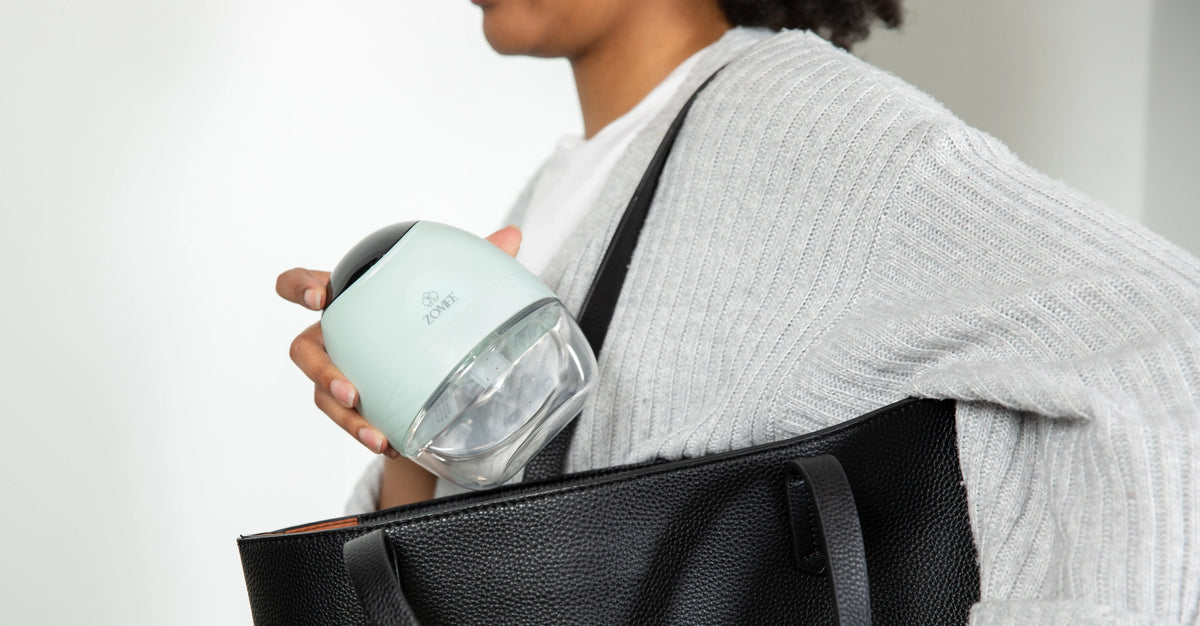
This is where the right gear can genuinely help. A wearable, hands-free pump lets you use your protected break time in a way that fits your day, whether that's finishing an email or joining a call while you pump (and remember, that time should be paid). It doesn't replace the space and time you're owed, but it can make actually using that time feel a lot more manageable.
If you're heading back to work and want help building a realistic pumping schedule, our lactation consultant's pumping guide walks through exactly that. And if you're still early in your feeding journey, our first-week breastfeeding guide is a gentle place to start.
Ready to dive deeper? Learn about how stress can affect your milk supply, read about the most common breastfeeding problems and solutions, and hear from more experts in our learning center.
This article is for general informational purposes and isn't legal advice. If you believe your employer isn't complying with the PUMP Act, consider reaching out to an employment attorney or the U.S. Department of Labor's Wage and Hour Division directly, they're there to help.
Sources: U.S. Department of Labor, Fact Sheet #73: FLSA Protections to Pump at Work; U.S. Breastfeeding Committee, The PUMP Act Explained; U.S. Equal Employment Opportunity Commission, Time and Place to Pump at Work.